What does PAO do?
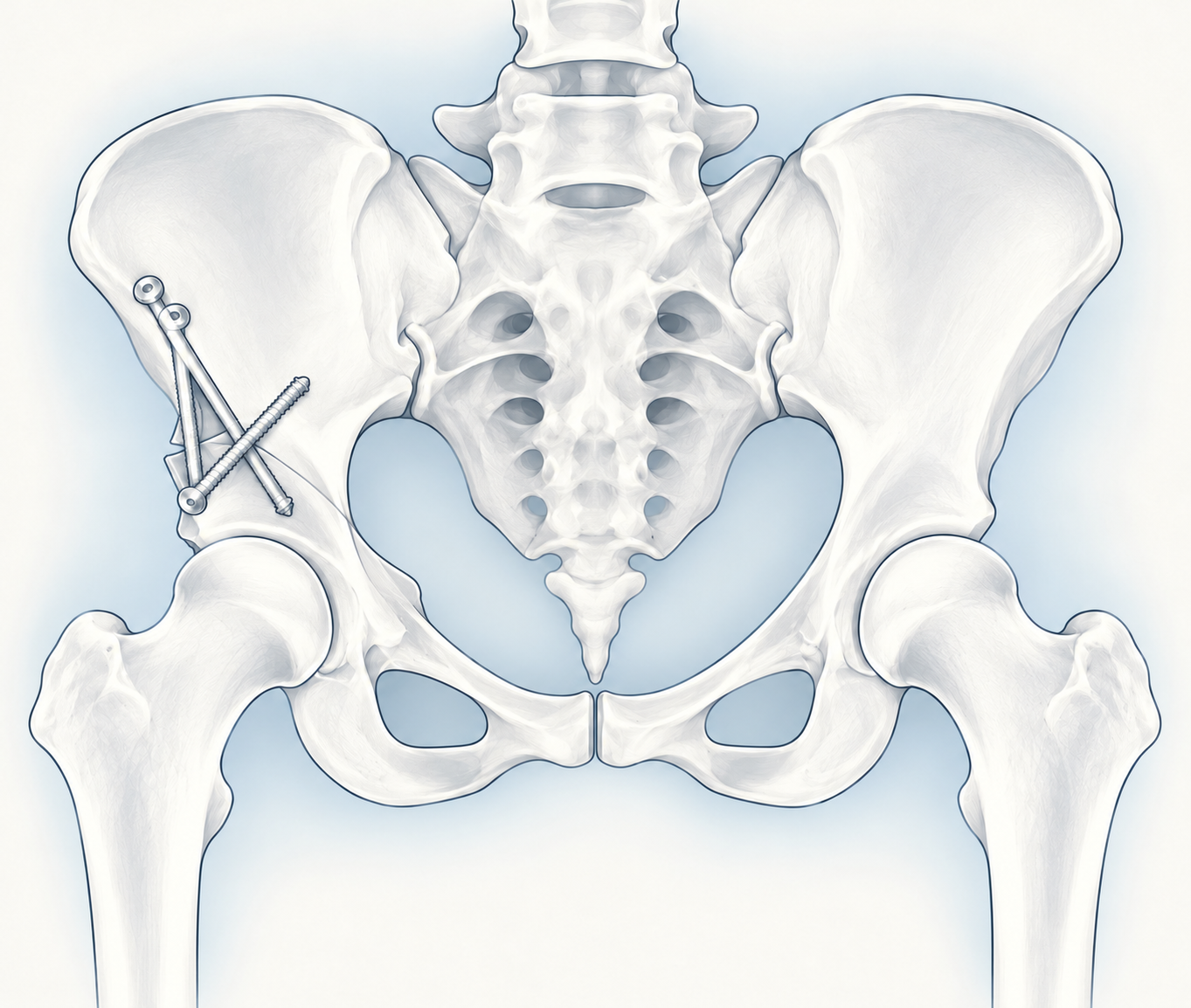
After PAO, the socket covers the femoral head more appropriately and the load is distributed over a larger area.
The posterior column of the pelvis remains intact. The pelvis stays stable and the birth canal is unchanged; vaginal delivery remains possible after PAO.
Assessment before surgery
Assessment starts with standing pelvic and axial hip X-rays. MRI helps us assess the cartilage and labrum. Together, these findings determine whether PAO is appropriate for you.
Who is suitable?
PAO can be suitable for hip dysplasia and acetabular retroversion when the cartilage is largely preserved and the joint is congruent, so that the head and socket fit together after correction.
If the cartilage is extensively worn or the joint severely deformed, reorientation offers little benefit. Hip replacement may then be the more appropriate recommendation. Cartilage condition matters more than age alone.
The Greifswald technique
We perform PAO through a 5–6 cm incision in the groin, using a natural interval between muscles without cutting through them. The sartorius and rectus femoris remain attached; the iliopsoas is moved aside.
Four osteotomy steps
- Operating time: 30–45 minutes without additional procedures
- Getting up on the day of surgery
- Hospital stay: 3–5 days
- 1Cutting the ischium below the joint while leaving the posterior pelvic column intact.
- 2Cutting the pubis above the obturator foramen.
- 3Cutting the ilium above the socket.
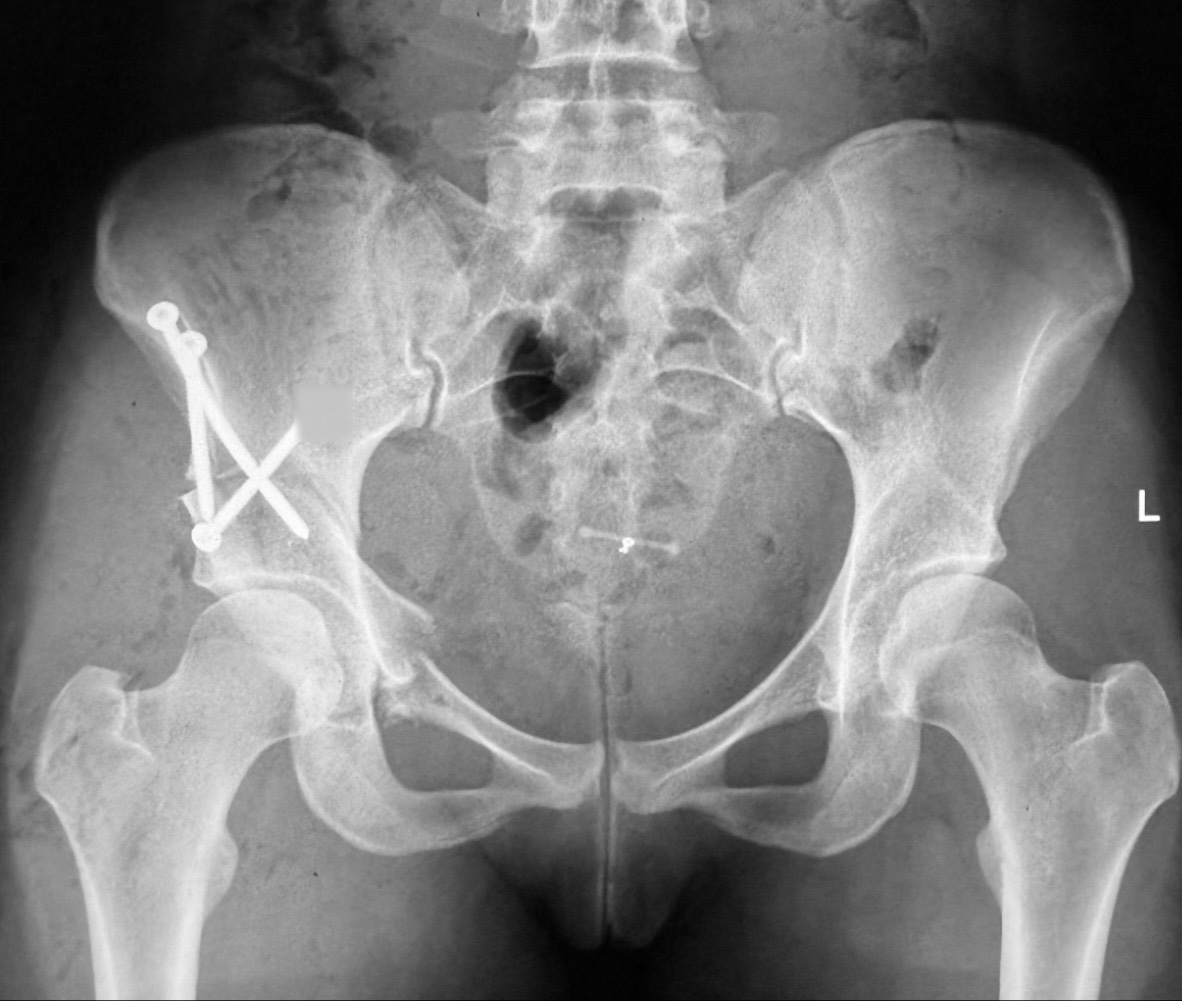
- 4Freeing and rotating the socket into the planned position, then securing it with screws.
Additional procedures
We discuss any additional procedure with you before surgery.
- If cam impingement is also present, the femoral head–neck junction can be reshaped through the same approach.
- Significant rotational deformity of the femur can be corrected through a separate incision on the outer thigh. This is needed in approximately 5–10% of patients.
Aftercare
- Weeks 1–6
- Partial weight-bearing of 15 kg using forearm crutches; do not flex the hip beyond 90°.
- First 6–8 weeks
- No active lifting of the operated leg (hip flexion).
- From week 3
- Once the wound has healed: exercise bike without resistance, with a high saddle; move the operated leg passively only.
- After 6 weeks
- Follow-up X-ray.
- From weeks 7–8
- Gradual progression to full weight-bearing.
- After 8–10 weeks
- Driving.
Inpatient rehabilitation is not routinely planned after PAO. If needed, it starts no earlier than around week 7. All timings are guidelines and depend on your clinical recovery and follow-up X-rays.
Risks
Every operation carries risks. In large centres, the reported rate of major complications after PAO is now around 1%, compared with around 6% approximately ten years ago. Higher rates may occur in centres performing few PAOs.
Temporary numbness on the outer thigh is common because of irritation of the lateral femoral cutaneous nerve. It usually resolves. Persistent burning pain is uncommon; please contact your surgeon promptly if it occurs.
With the minimally invasive technique, we now see virtually no heterotopic ossification, meaning new bone formation in the soft tissues.
Contact your surgeon directly with concerns after surgery. Your surgeon knows your hip and coordinates further care.
Frequently asked questions
+Is PAO a major operation?
Yes. It is a major pelvic procedure performed through a 5–6 cm groin incision, without cutting through muscle. Operating time is 30–45 minutes without additional procedures.
+When can I fully bear weight?
Initially, use crutches with 15 kg partial weight-bearing for six weeks. Following the six-week X-ray, full weight-bearing is introduced gradually from weeks 7–8, depending on your recovery.
+Can I give birth after PAO?
Yes. The posterior pelvic column and birth canal remain unchanged, so vaginal delivery remains possible.
+Can PAO also treat acetabular retroversion?
Yes, provided the cartilage is largely preserved and the joint remains congruent after correction.